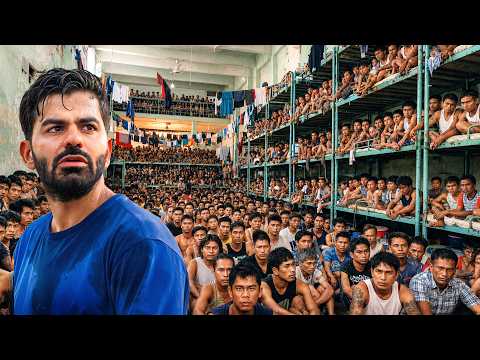
Port-au-Prince, Haiti: a capital divided by armed power
In INSIDE the World’s Most Dangerous City 🇭🇹 (INSANE), Joe HaTTab guides viewers through Port-au-Prince, Haiti’s capital—portrayed as a city where more than 95% of the capital is controlled by armed gangs, including neighbourhoods, roads, fuel, electricity, and even ports. The video frames the city as an uneasy geography: one hillside hotel district contrasts sharply with the fractured world beyond, where movement comes with risk and everyday life is shaped by armed control.
A city no longer governed in the usual way
The film opens with a stark premise: Port-au-Prince is described as a city where police no longer hold control. According to the video, there are more than 200 armed groups operating in the capital alone, and many territories function like separate borders—isolating communities and dictating what residents can access and where they can go.
We’re shown how filming and travel require extreme caution. The route from the airport to the hotel district is described as passing through hardened boundaries—isolated government buildings, police, and hotels perched above the rest of the city—before the story descends into the areas where ordinary rules no longer apply.
Displacement camps: homes built from survival
The journey begins in displacement camps, where people who fled gang violence now live with little clarity about whether—or when—they will return. The video depicts families living in precarious conditions, with displaced locals who escaped after gangs burned down their neighbourhoods.
Rather than treating displacement as a temporary inconvenience, the film presents it as a continuing reality: a lived situation, with people adapting to uncertainty and danger.
Destroyed neighbourhoods: communities erased
From the camps, the video moves to destroyed neighbourhoods—areas described as having been abandoned after gangs burned or attacked local homes. The filming focuses on the aftermath: rubble where communities once stood, widespread bullet damage, and streets that appear frozen in the violence that preceded them.
Even as gangs relocate in the narrative, the film suggests the destruction remains. One neighbourhood is shown as looking like it was bombed, with destroyed infrastructure and signs of extreme harm.
Vigilantes: civilians defending their communities
Next, the film introduces the resistance—civilians who took up arms to protect their streets. The video describes them as ordinary people: mechanics, farmers, fathers—who decided to defend their homes themselves when the state’s protection failed.
In resistance areas, there are checkpoints used to identify and search people. The film describes ID checks, searching for weapons, and actions taken when suspected gang members are found. It also notes that civilians can be intercepted and harmed while trying to move through contested areas.
What “resistance” looks like on the ground
- Checkpoint control: searching people and checking carried weapons.
- Community authority: residents who refuse to flee and defend their area.
- Risk of misidentification: the video underlines that wearing a resistance uniform in gang-controlled territory could be fatal.
Gangs, networks, and the figure behind the fear
The video’s final movement focuses on gang power and its organisation. Reaching the meeting point is described as difficult and dangerous: private cars are said to be targeted, meaning travel may require buses and disguises. The film depicts tightly packed transport and armed presence outside contested zones, emphasising how quickly movement can become life-threatening.
According to the video, multiple leaders operate under a unified umbrella known as Viv Ansanm (meaning “living together”), previously known as G9. The leader portrayed is Jimmy, nicknamed Barbecue, described in the video as a former police officer who took up arms against the system.
While the video does not ask viewers to accept these figures as anything other than part of the crisis, it does present how gang structures can exert control and persist, including along the coast and over key areas.
How Haiti reached this point: a brief timeline from the film
The video then turns to history, arguing that modern instability did not arrive overnight. It describes:
- Colonial exploitation: Haiti is presented as once being Saint-Domingue, a wealthy French colony built on slavery.
- Independence and retaliation: after the 1804 revolution, the film says France imposed an “Independence Debt” in 1825 on the new nation.
- Foreign intervention in 1915: the video describes a United States invasion, control over banks, and seizure of gold alongside a corrupt system left behind.
- The 2010 earthquake: it states that the earthquake killed over 200,000 people and revived chaos.
- State collapse and power vacuums: it claims gangs were born from the vacuum left by an absent state.
- 2010s instability and 2021 assassination: the video notes that a president was assassinated in 2021, with police losing control and government collapsing.
Why this story matters
This is not a travelogue of destinations and attractions. It is a record of how people live when systems fail—how communities improvise safety, how displacement becomes long-term, and how power concentrates in armed hands. The film’s perspective is ultimately human: it shows fear and survival side by side, and it underlines resilience in the face of collapse.
Plan your trip responsibly
If you’re inspired to learn more about Haiti or consider travel to the region, the most important takeaway from the video is risk. The content repeatedly stresses checkpoints, armed control, and the dangers of movement. Any real-world visit would require extensive local guidance and professional support—especially regarding safety, access, and permissions.
Want help turning inspiration into a safe itinerary?
At Sakina Tours, we specialise in curated travel experiences with thoughtful logistics and a premium approach to planning. If you’d like to explore Haiti’s culture, history, and landscapes with expert support—or prefer a safer alternative with a similar spirit of discovery—tell us what you’re dreaming of, and we’ll build a plan around it.