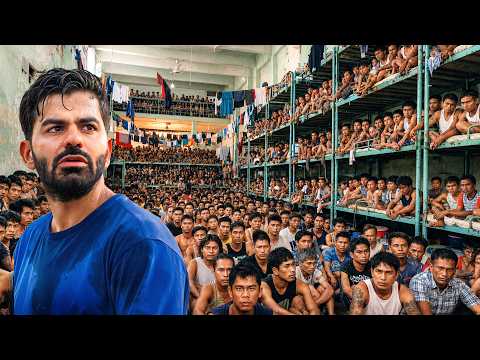
There’s a side of the Philippines rarely shown in travel photos—one shaped by extreme overcrowding, economic desperation, and a shadow economy that can turn survival into illegality. In this raw documentary journey (filmed in Manila, Tondo, Recto and Cebu), Joe HaTTab investigates how poverty can contribute to crime, and how the consequences then funnel people into some of the country’s most overcrowded prisons.
Manila and Tondo: living in density, surviving on scraps
The video opens in Manila, described as one of the most densely populated cities on Earth, then moves to Tondo, a district often described as “a country within a country”. Here, more than 70,000 people live in the neighbourhood, with an average of one person per square metre—an everyday reality of scarcity.
One of the most striking elements is the reliance on pagpag, a Filipino term for leftover food. The video describes pagpag as food scraps collected from fast-food restaurants such as McDonald’s and KFC. Collectors gather leftovers outside restaurant doors, which are washed and cooked again before being sold cheaply.
The documentary includes a vivid exchange about how the food is recycled—washing and cooking it again—and how common this is for families. It’s presented not as an isolated incident, but as a routine response to high prices of food and limited means.
Garbage as an income stream
Beyond food, the video shows how waste becomes a livelihood. It explains that people earn by sorting through dumpsites and recycling materials such as plastic, cardboard and metal. Reports mentioned in the video claim tens of thousands earn their living through scavenging.
The message is clear: in Tondo, “garbage” is not only waste—it is part of an entire economy built around collection, sorting and resale.
Inside Manila North Cemetery: poverty that reaches the graves
Charities are shown attempting to help in areas like Manila North Cemetery, where the video states that thousands of people live among the dead. Some sleep inside tombs or build homes on top of graves, not out of fearlessness, but because life outside the cemetery is more expensive than they can afford.
For some residents, even cleaning graves becomes both work and living arrangement—families staying in the cemetery while playing games, including football on a grave. It’s presented as extreme poverty with nowhere else to go.
Recto and the forgery market: identity can be bought
The video argues that crime can grow from extreme poverty. It then pivots to Recto in Manila, where the documentary describes a market for forged documents. It references police action: reports in the video say police arrested at least 40 people allegedly involved in production of fake documents along Recto.
In an alley market setting, the video portrays forgery as a wide service—covering forged driver’s licences, passports, and even other types of credentials. It describes how a person might obtain documents that allow someone to change identity, including references to “death certificates” being used to support a new identity.
Buying a fake passport (as part of the video’s investigation)
The documentary shows the process of approaching a forger to purchase a Filipino passport, with discussion of pricing (including the statement that the filming payment was $150). Importantly, the video includes a warning/disclaimer that no one should do this, stating it could lead to prison and a permanent ban from entering the country.
Cebu: illegal weapons hidden deep in the forests
After Manila, the video heads to Cebu, described as the second-largest city in the Philippines. The documentary follows a journey away from urban centres, reaching hidden locations where illegal gunsmiths make firearms by hand.
The video presents a gunsmith who began making weapons when he was 12 years old, with the stated driver being poverty. It describes that making one gun can take around 10 days, and includes discussion of what happens if someone is caught—mentioning fines, imprisonment, and bail.
It also explores the supply chain: buyers purchase weapons cheaply, then seek ways to get them licensed, according to the documentary’s account, while noting the illegality remains tied to lack of a real licence. Connections and networks are discussed as reasons people may avoid being caught.
Where crime leads: the road to overcrowded prisons
The final focus is incarceration. After crime, the documentary suggests, many people end up in prison—specifically mentioning one of the most overcrowded prison systems in the world and stating that the next episode will show harsh, overcrowded prisons.
Even before those scenes, the video includes testimony-style statements about reasons people are charged—mentioning allegations including human trafficking, drugs, and rape, along with expressions of regret and loss.
Why this matters beyond the documentary
This film is not a travel guide in the usual sense. It’s a human-focused investigation into how economic pressure, limited opportunity, and dense urban living can contribute to a cycle: poverty → crime → prison. If you’re planning a trip to the Philippines, the video is a reminder to seek context, support responsible travel, and understand that behind every headline or street scene there are real lives shaped by forces far bigger than a tourist can see.
Plan your trip responsibly with Sakina Tours
At Sakina Tours, we believe travel should broaden perspective while respecting the places and people you visit. If you’d like a thoughtfully curated itinerary—anchored in local culture and responsible engagement—get in touch and let us design your next Philippines adventure.