

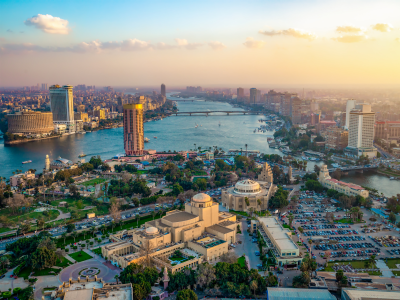
Cairo becomes extraordinary when you explore it as a chain of hidden clusters rather than single landmarks. Start at the Manial Palace Museum, where royal interiors, layered design influences, and curated garden landscapes reveal a refined side of Cairo that many travelers overlook. Then continue to the nearby Gayer-Anderson Museum, where carved mashrabiyas, period rooms, and intimate courtyards open a window into the private elegance of historical Cairene life. From there, walk through lesser-known lanes in old districts to discover brass workshops, handmade lantern artisans, traditional calligraphy stores, old perfume and spice sellers, and quiet façades that preserve Mamluk and Ottoman textures in plain sight. Add a stop at Bab Zuweila, pass through the historic urban fabric near Al-Muizz Street, and continue into smaller side alleys where daily life still moves inside architectural memory.
For a deeper cultural route, connect this with living street culture in Khan El Khalili’s quieter corners (not only the main tourist strip), then include Bayt Al-Suhaymi for domestic heritage and pause at Wekalet El Ghouri for historical atmosphere. If timing aligns, pass by Al-Azhar Park viewpoints at golden hour for skyline-with-minarets perspectives and a softer visual ending to the day. Then move into a heritage-style dinner in old Cairo, followed by a tea stop in a historic café zone and a lantern-lit walk where the city’s hidden magic appears between carved doors, shaded passages, and old stone walls rather than modern billboards.
To deepen the experience further, add a third arc focused on Cairo’s intellectual and artisanal soul. Explore historic stretches around Souq al-Silah, where long-standing craft traditions survive in workshops working with metal, wood, and decorative details. Add a careful pass through side streets lined with arched entrances, weathered carved doors, projecting wooden balconies, and restored façades that hint at family histories behind closed walls. If you want an educational layer, include a guided heritage walk focused on inscriptions, symbolic motifs, and storytelling through architectural details across façades and gateways.
For a richer final chapter, blend atmosphere with local lifestyle. Begin your evening with a quiet rooftop or terrace pause overlooking old Cairo’s layered skyline, then continue to a traditional dining table highlighting Egyptian classics with regional depth. After dinner, walk through calmer alleys near historic gates where warm lantern light and softer street sounds offer a very different Cairo from the daytime rush. If time allows, add one final stop at a classic café for tea and dessert, then a short stroll through artisan lanes to see shop shutters, carved signage, and stone textures under night lighting. In this sequence, Cairo feels less like a crowded capital and more like a curated journey through memory, craftsmanship, and living heritage.
Attractions & Experiences:
Khan El Khalili
Wekalet El Ghouri
Souq al-Silah craft corridors
Heritage-style dinner in old Cairo
Historic café tea stop
Lantern-lit evening walk

