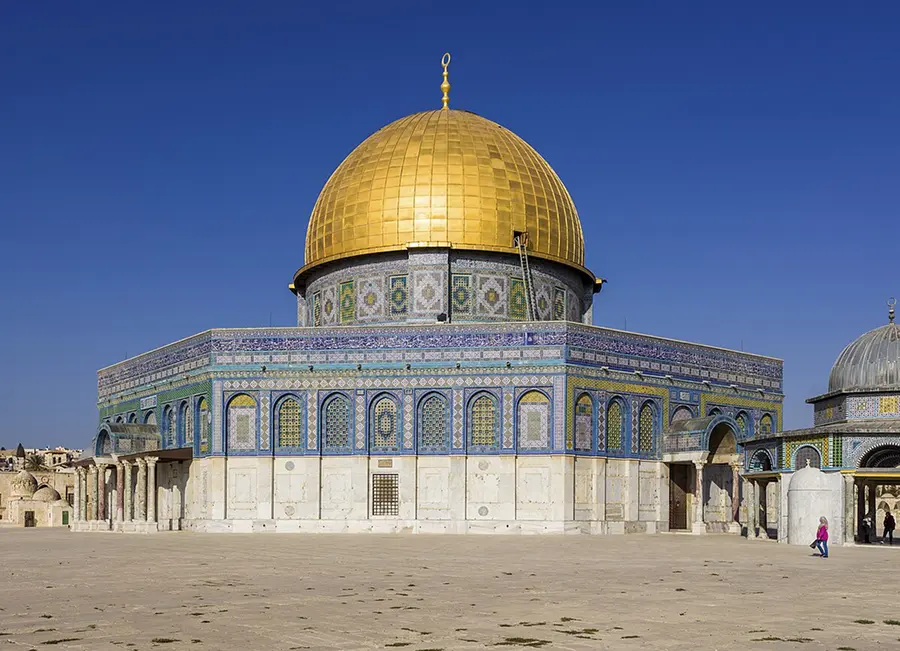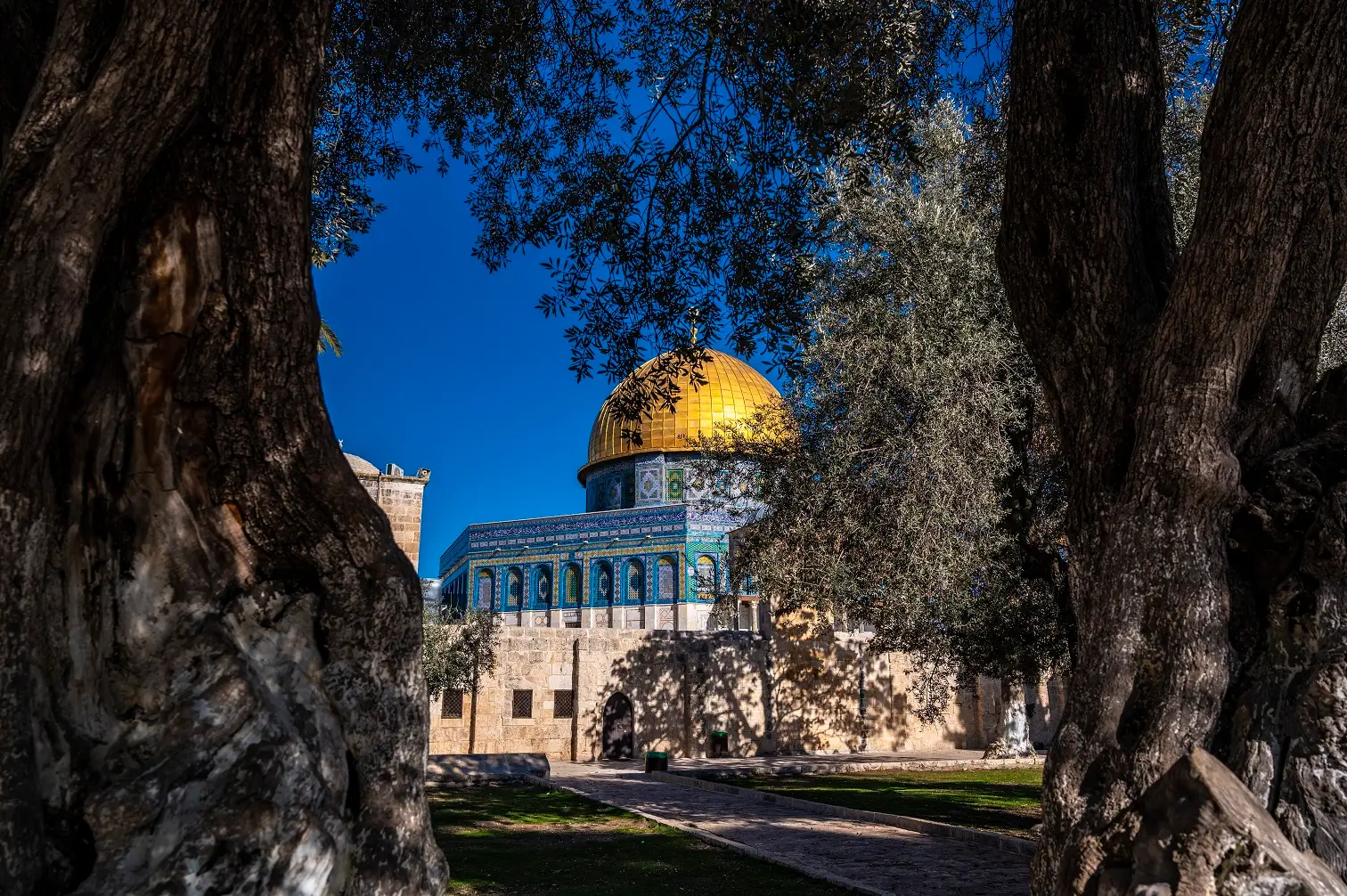
Al-Quds is not a city that introduces itself all at once. It reveals itself in layers: first through reverence, then through stone, then through memory. Begin before dawn at Al-Masjid Al-Aqsa, when the courtyards still carry the coolness of night and the first light rests gently on the Dome of the Rock. Do not rush the moment. Stay after prayer. Watch the slow movement of worshippers across the vast sanctuary, the stillness between footsteps, the way the old stones seem to hold centuries of devotion without needing to declare it. In Al-Quds, holiness is not staged. It is felt in quiet succession.
From there, let the Haram open itself beyond its most photographed landmarks. Move toward the lesser-noticed details: the Dome of the Chain with its elegant geometry, the Fountain of Qayt Bay with its refined Mamluk presence, the shaded passages that connect worship, learning, and daily life. These are the details many visitors miss when they come only to see the grand symbols. But Al-Quds is a city of thresholds and subtleties. Its beauty lies not only in what is monumental, but in what sits quietly beside it.
Then step outward into the old commercial arteries of the city. Walk through Souq Al-Qattanin, one of the most elegant historic markets in Jerusalem, where the passage itself feels architectural rather than merely commercial. The vaulted ceiling, old stone rhythm, and direct connection to the sanctuary create a rare experience: a market that feels spiritually adjacent rather than separate. This is where the city begins to show its lived texture. Fabrics, movement, old doors, passing greetings, and the gentle compression of daily life all remind you that Al-Quds is not only sacred history; it is also continuity.
Al-Quds also rewards those who seek knowledge as part of the journey. Within the Al-Aqsa compound, the Islamic Museum offers another form of encounter, not through panoramic views or emotional scale, but through manuscripts, objects, and the material memory of Islamic civilization. Here, the city becomes legible in another way. You begin to understand that Jerusalem was not only defended and loved; it was also endowed, studied, inscribed, curated, and transmitted across generations with care.
To understand Al-Quds more fully, rise above it. Head toward the Mount of Olives in the softer hours of morning or near sunset, when the city’s outline gathers light rather than glare. From here, the relationship between elevation and sanctity becomes clear. The Old City does not merely sit within walls; it appears almost gathered into itself, held between slopes, valleys, and faiths layered across centuries. The panoramic view offers perspective, but it also offers humility. This is one of the few places where geography deepens emotion.
If your pace allows, continue through the Old City walls and along its historic paths with no need to force an itinerary. Al-Quds is best experienced with room for pause. A gate, a staircase, a courtyard, a stretch of old stone, a quiet view toward the sanctuary, these are not filler moments, they are the journey itself. Even the city walls feel less like barriers than witnesses. They frame a place where spiritual significance and human endurance have long been inseparable. UNESCO continues to recognize the Old City and its walls for their exceptional significance, including the central place of Al-Haram Al-Sharif within its heritage fabric.
There is also a tenderness to Al-Quds that reveals itself only to those who stay attentive. It is found in the way light falls across old courtyards, in the transition from public devotion to side-street quiet, in the dignity of people who continue to live their days around one of the most symbolically charged places on earth. Luxury here is not opulence. It is access to meaning. It is the privilege of slowing down enough to receive a city that has never been ordinary.
Return finally to Al-Aqsa. Not because there is nowhere else to go, but because it remains the city’s spiritual anchor. Sit in the courtyard if you can. Let the pace soften. In Al-Quds, one does not leave with the feeling of having completed a visit. One leaves with the sense of having touched something older, deeper, and far more enduring than travel alone can explain.
Attractions & Experiences:
Al-Masjid Al-Aqsa
Al-Qibli Mosque
Dome of the Rock
Dome of the Chain
Fountain of Qayt Bay
Islamic Museum within the Al-Aqsa compound
Souq Al-Qattanin
Old City of Jerusalem and its Walls
Mount of Olives panoramic viewpoint
Quiet exploration of the Old City’s stone lanes and gates